
Key Summary
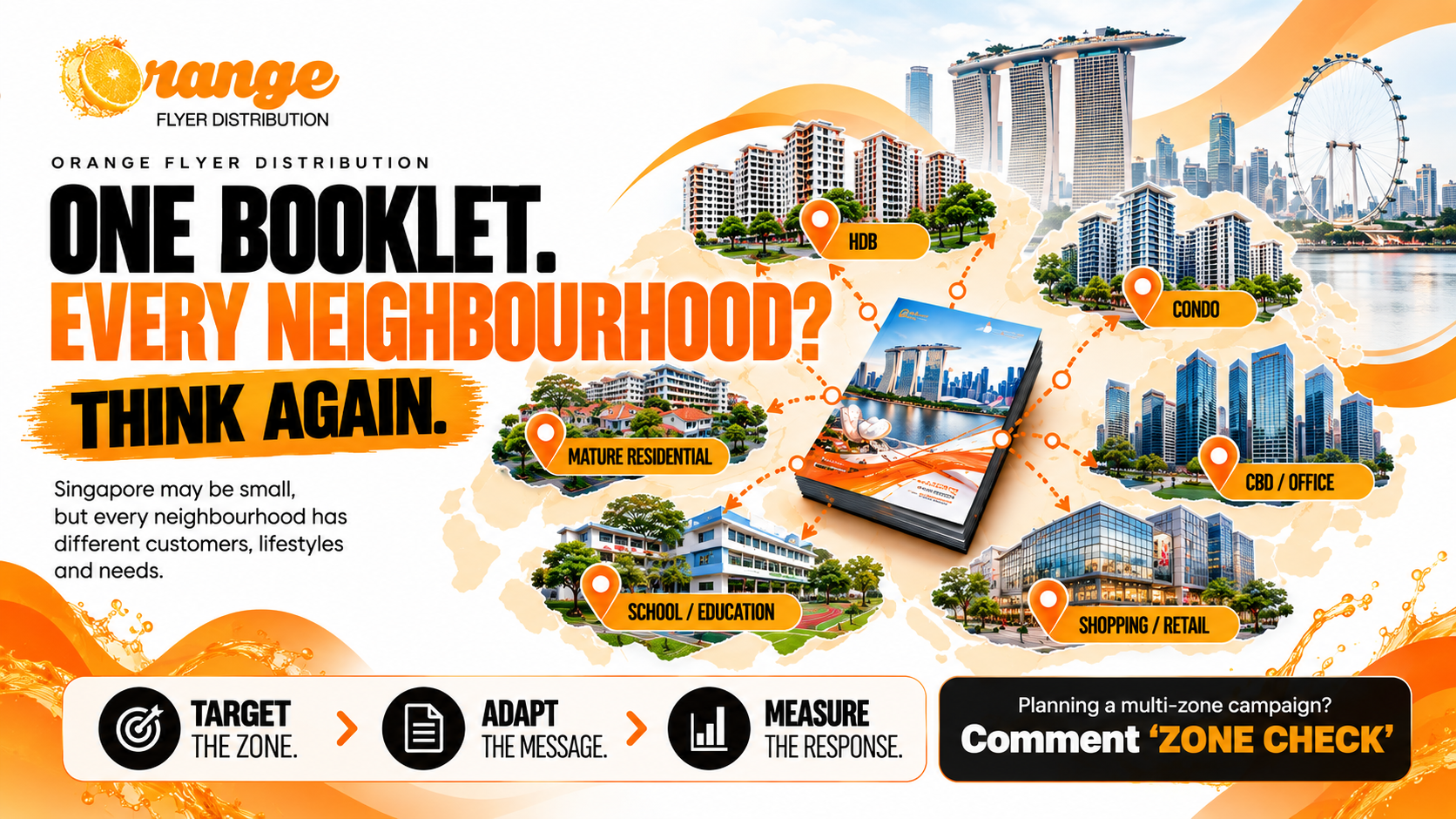
Singapore is a small country, but its neighbourhoods are far from identical. Household income, housing type, lifestyle, age profile, family needs and commercial activity can vary considerably between planning areas. For Singapore SMEs, this creates an important question: should every neighbourhood receive exactly the same booklet? A stronger approach is multi-zone distribution, where businesses identify their target audience first, divide locations into relevant zones, adapt the offer or message to each zone, and use measurable actions such as QR codes, vouchers, WhatsApp enquiries or booking links. This approach helps businesses think beyond distributing more booklets and focus on reaching the right people with a reason to respond.
Why Geographic Targeting Matters for Booklet Distribution in Singapore
Most flyer and booklet campaigns in Singapore start with a simple decision: pick a coverage area, print enough copies, and distribute. The question rarely asked is whether the message inside the booklet should actually be the same for every zone it reaches. It is a fair assumption to make, Singapore is small, well connected, and often treated as one homogeneous market. The data tells a different story.
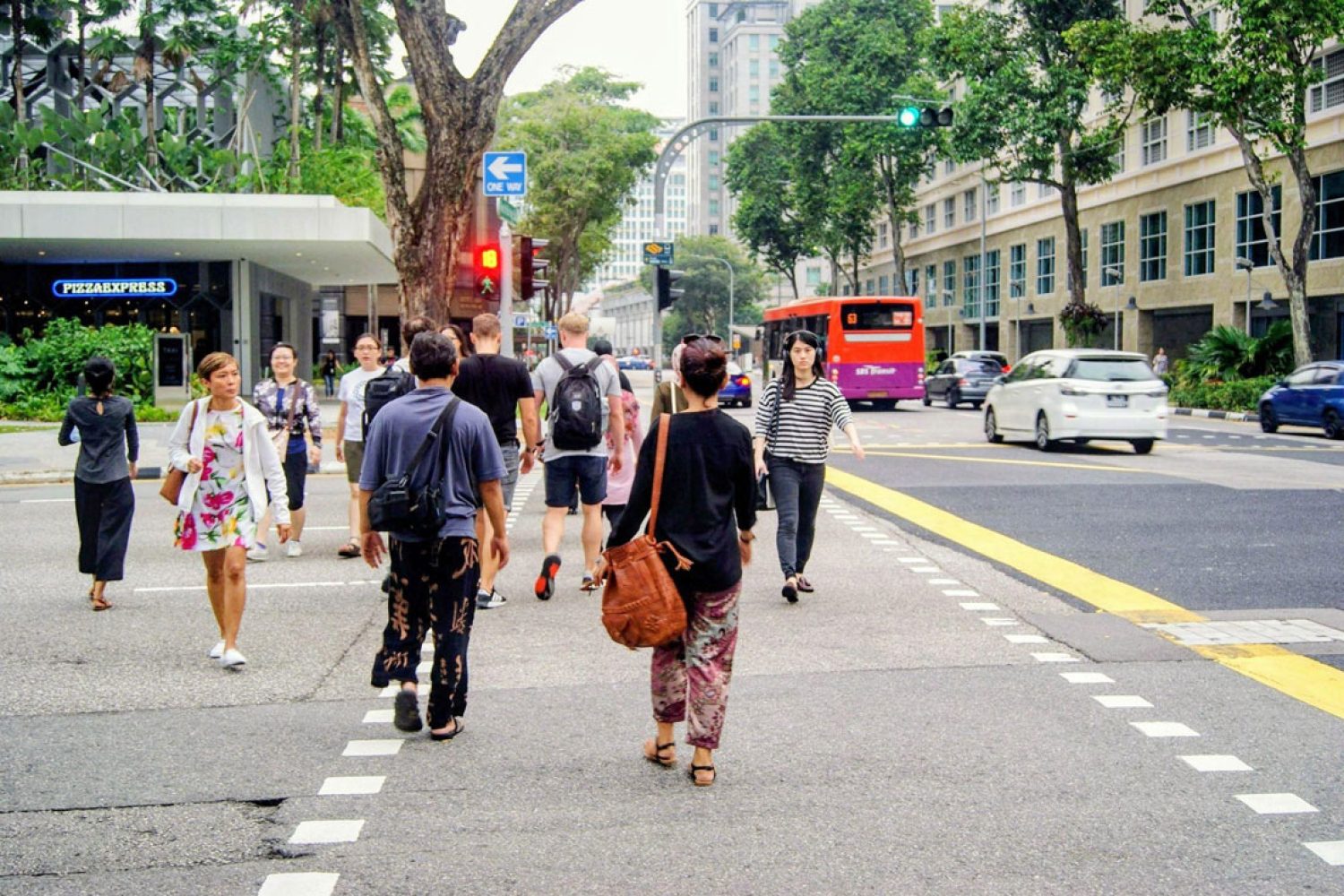
Singapore is genuinely made up of distinct neighbourhoods, each with its own demographics, lifestyle patterns, commercial activity, and customer needs. A campaign or offer that performs well in one estate can fall flat in another, not because the product is wrong, but because the audience receiving it was never the right fit to begin with. Income is one of the clearest examples of this variation. An analysis of the Department of Statistics’ own General Household Survey found that Tanglin leads with 57% of households earning above S$30,000 a month, followed by Bukit Timah at 51%, Novena at 34%, Marine Parade at 25%, and Serangoon at 23%, against a national figure closer to just one in seven households islandwide, according to an analysis published by FYT Consultants.
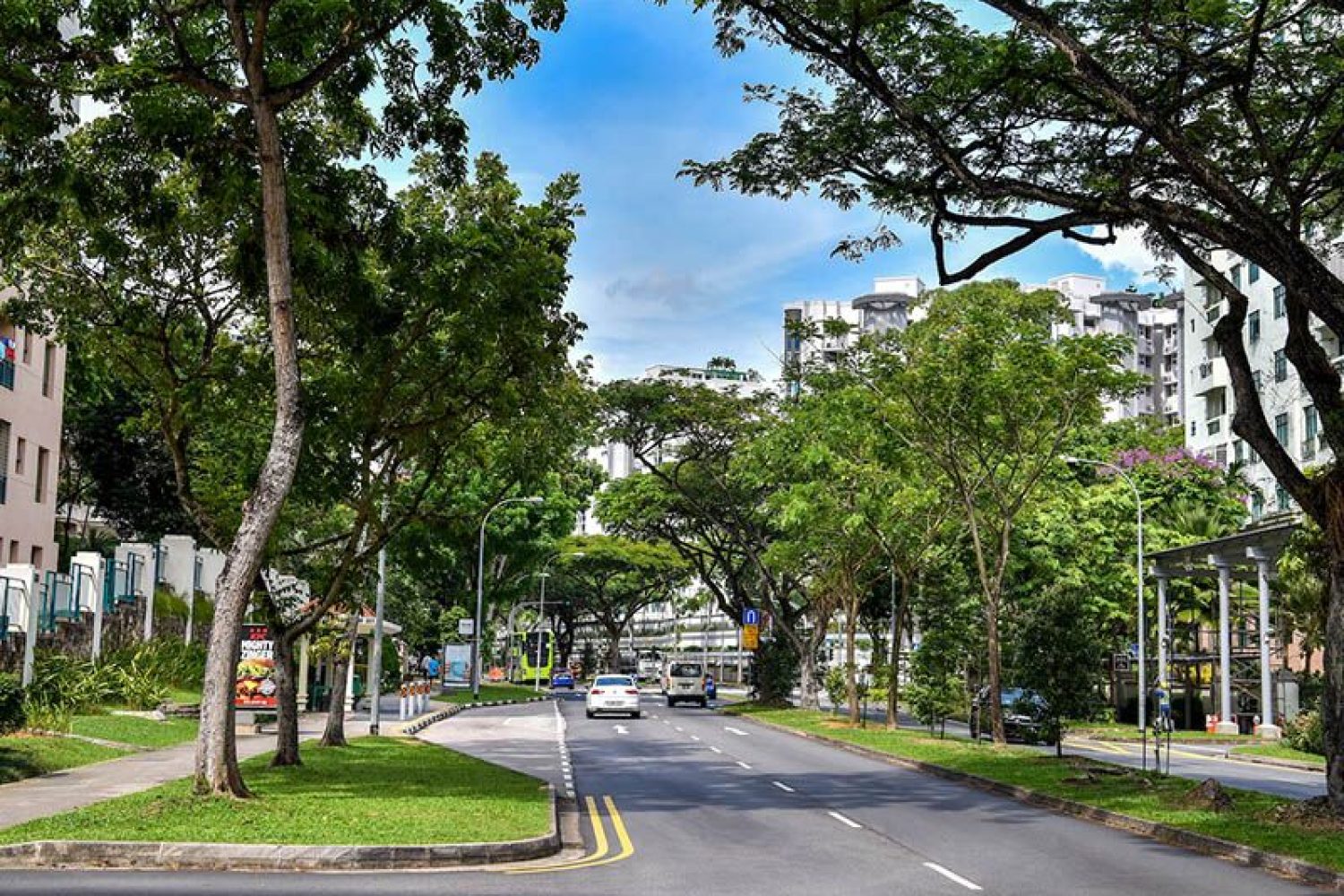
The variation does not stop at planning area boundaries either. Even within HDB alone, flat type matters more than most businesses assume. In 2025, four-room HDB households earned an average of roughly $11,097 a month from work, close to the national median of $10,591, according to an analysis of official 2025 SingStat data, meaning income climbs meaningfully as flat size increases, even before comparing one town to another. This is not a marketing claim, it traces directly back to SingStat’s own Census of Population 2020, published on data.gov.sg, covering resident households by planning area and monthly income from work. When two zones can differ by four times or more in household income, sending the exact same booklet to both means wasting reach on one side or under-serving the other.
A Multi-Zone Distribution Framework for Singapore SMEs
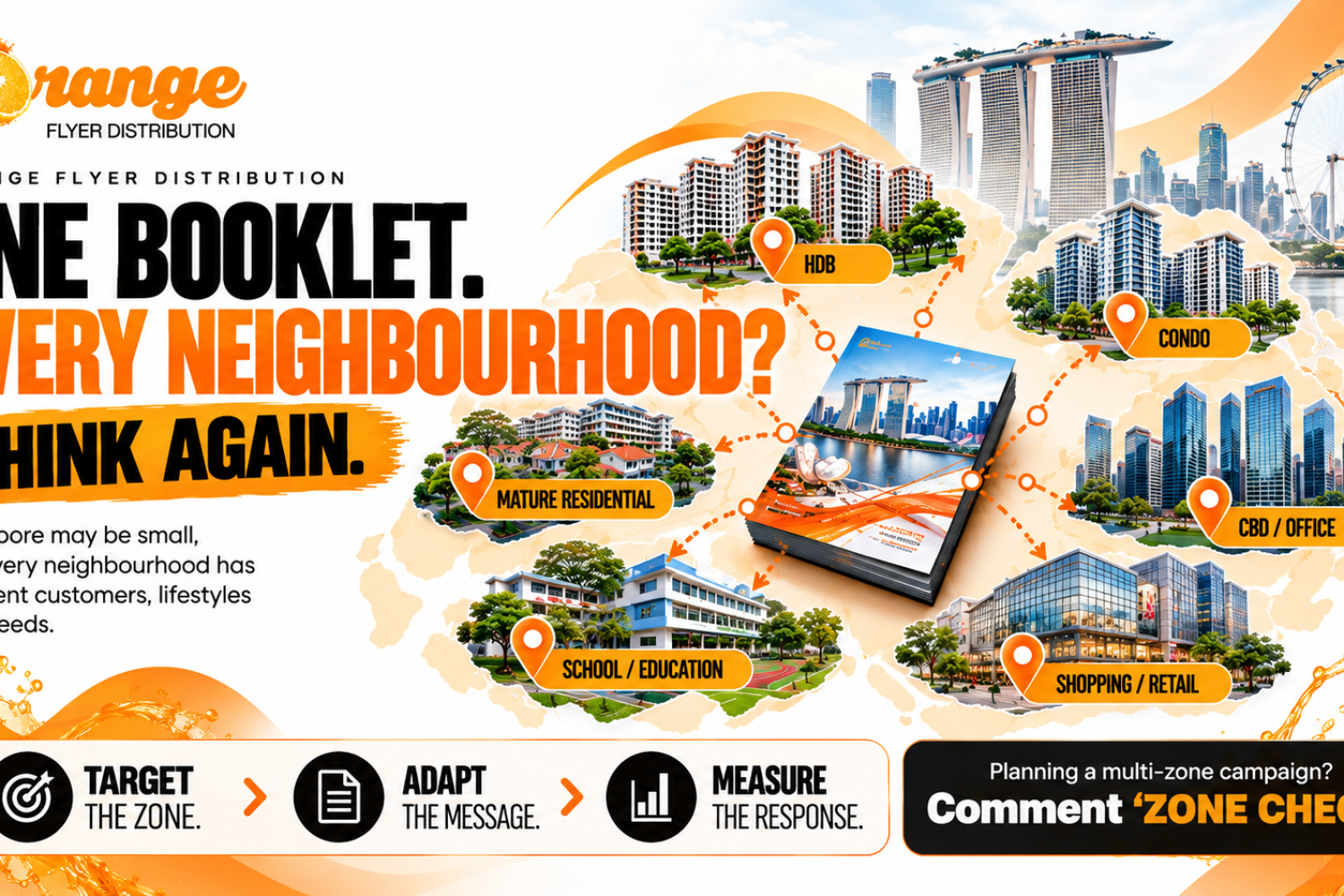
A useful multi-zone booklet strategy starts by dividing your campaign into meaningful audience zones rather than treating the island as one coverage area. These could include family-heavy HDB estates, mature residential neighbourhoods, newer BTO estates, private condominiums, CBD office clusters, shopping districts, school-adjacent areas, or locations surrounding your own physical outlet. The zones should be based on your business objective rather than simply following postal codes, and for each one, it helps to know what is genuinely true about it: housing type, income range, and the commercial activity already present.
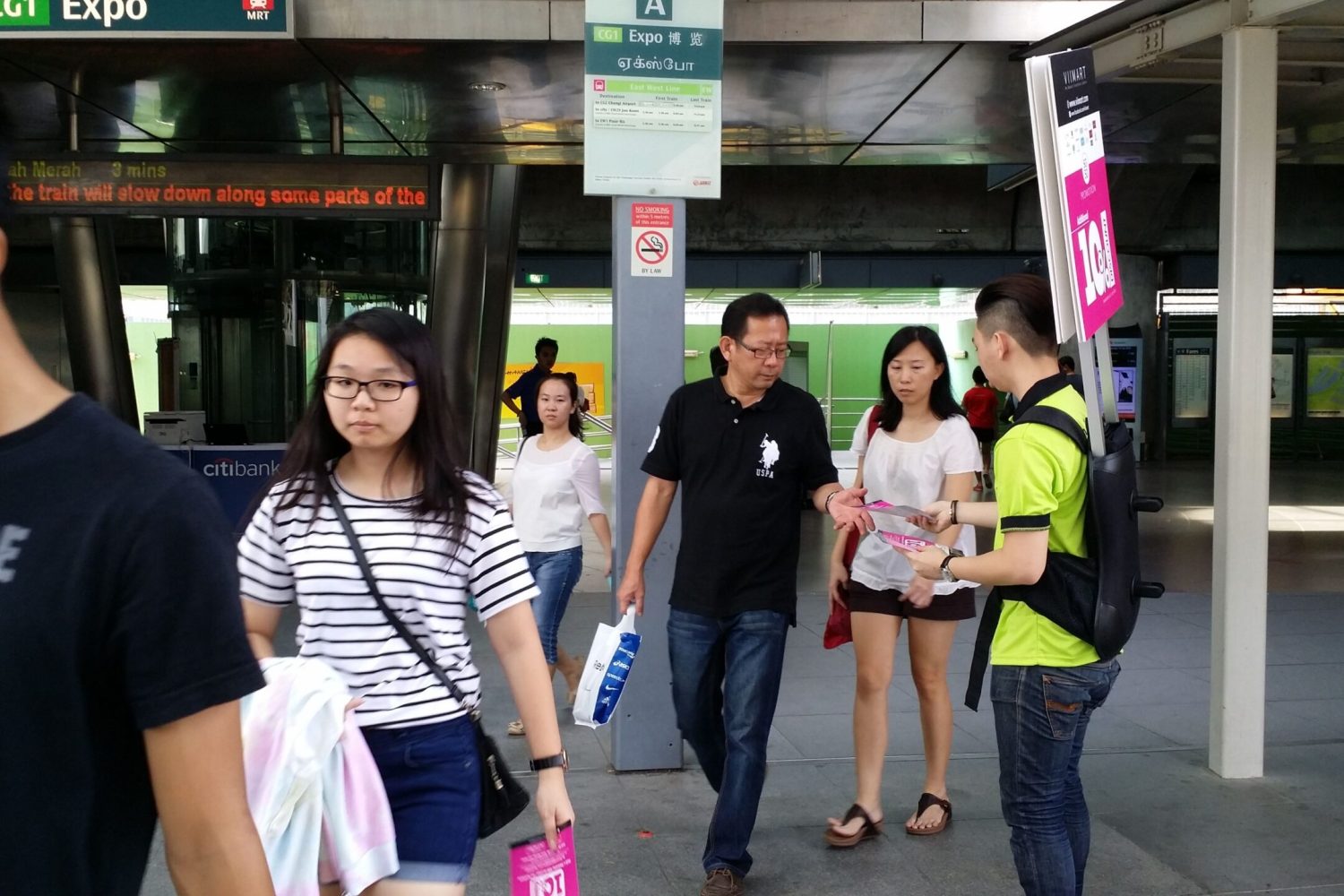
Once the zones are defined, the next step is deciding whether every zone actually needs the same message. A premium service pitched to a private condo zone will likely underperform in an estate dominated by smaller HDB flats, just as a budget-focused offer can look out of place in a higher-income planning area, so income data works best as a starting filter rather than a final answer. Two zones with similar income can still behave quite differently too, an estate near a major mall, MRT interchange, or school cluster will respond to different offers than a quieter residential pocket with the same income profile. In practice, this could mean a tuition centre leading with enrichment or trial classes in family-oriented neighbourhoods, a restaurant promoting weekday lunch deals around office clusters while pushing family bundles around residential estates, or a home service company highlighting renovation or moving packages where that specific need runs stronger. The booklet format itself can stay consistent while the offer, CTA, or featured service shifts by zone.
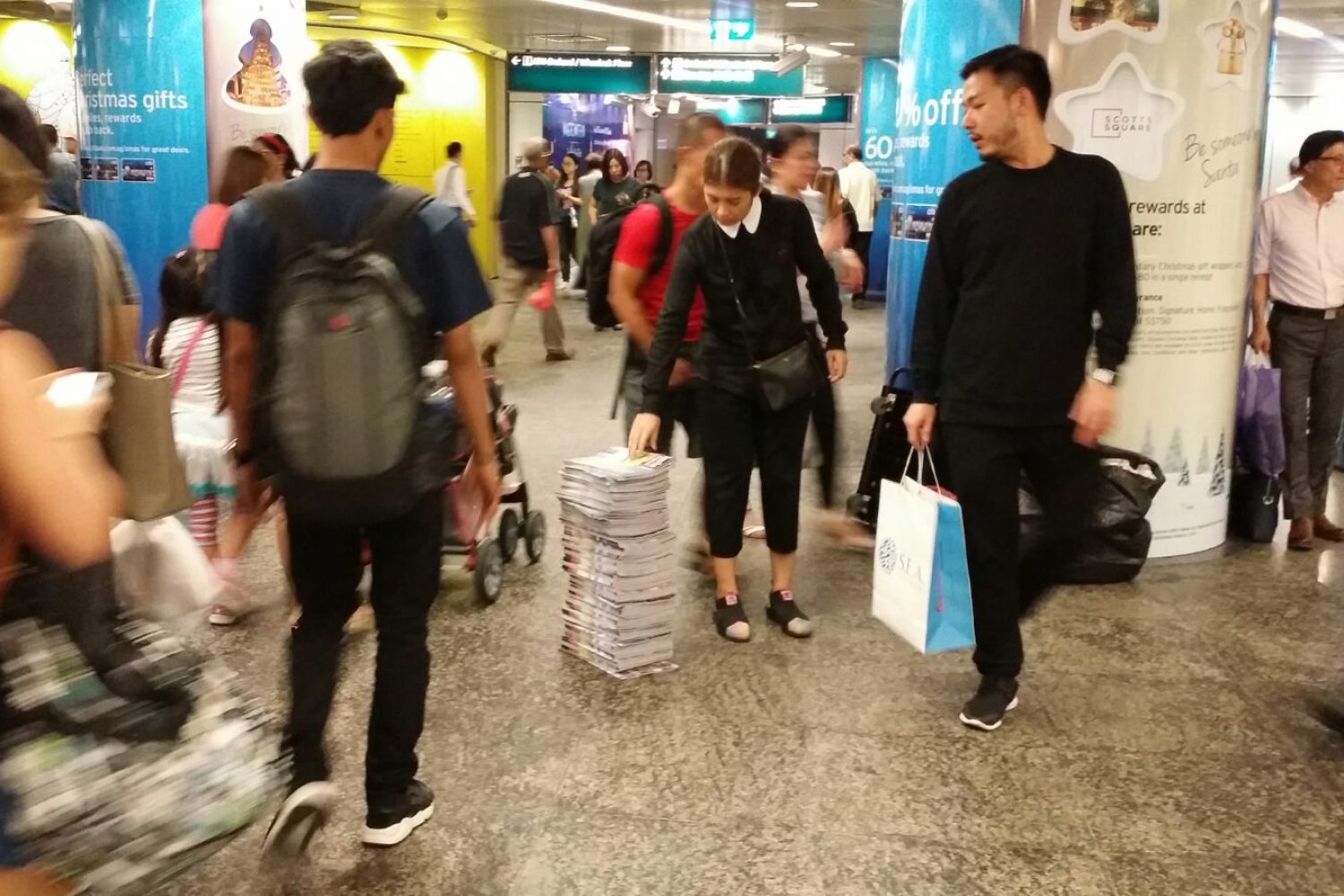
The final step is giving each zone something measurable, rather than assuming one message works everywhere and hoping for the best. QR codes can lead to different landing pages, vouchers, WhatsApp conversations, or booking forms by zone, and unique voucher codes make it possible to compare responses between locations directly. This turns “how many booklets did we distribute” into sharper, more useful questions: which zone generated enquiries, which offer received more scans, and which neighbourhood should receive the next wave. A simple way to summarise the whole approach is target, divide, adapt, distribute, measure, refine, a cycle that treats every distribution as information for the next one rather than a one-off activity.
How Orange Flyer Distribution Turns Zone Coverage Into Smarter Campaigns
This is where Singapore SMEs can take a more strategic approach to flyer distribution. Some providers focus mainly on price per thousand copies and island-wide coverage, which can give SMEs broad reach but may also mean spending budget on areas that are less relevant to their target customers. Others promote precision targeting and area selection, showing that businesses are looking for more relevant distribution. Postal-code targeting can help define where materials should be delivered, but a postal code alone does not tell an SME which message, offer or call to action will work best in that area. By connecting location data with audience needs and campaign objectives, SMEs can make better use of their distribution budget, deliver more relevant offers and learn which neighbourhoods generate stronger engagement for future campaigns.
Orange Flyer Distribution already has something: real zone infrastructure. Distribution already runs across 20 locations islandwide, with a shared booklet format combining around 30 advertisers per drop. Until now, this structure has mostly been positioned around cost sharing and consolidation, which is a real benefit, but it is only half the story. The same zone coverage that makes the booklet affordable is also the foundation for genuine zone-by-zone customisation, adjusting which advertisers and offers appear in each zone’s booklet based on what is actually known about that area’s income profile and demographics.
This is where Orange can move ahead of competitors chasing precision through postal codes alone. A postal code tells a distributor where to walk. Zone-level income and demographic data tells a business what to say once they arrive. Pairing the existing 20-location network with this kind of zone awareness means a booklet distributed in Bukit Timah and one distributed in a heartland HDB estate can carry a genuinely different mix of advertisers and offers, without losing the cost efficiency that makes the shared booklet model work in the first place.
Closing Thoughts
Singapore may be small, but treating it as one single audience is where a lot of flyer and booklet budgets get wasted. The income gap between planning areas, and even between flat types within the same town, is large enough that a single generic message genuinely cannot serve every zone equally well.
Planning a multi-zone campaign does not mean starting from scratch for every neighbourhood. It means using what is already known about each zone, income, flat type, and lifestyle, to decide what belongs in the booklet before it gets printed. That is a more useful question than simply asking how many copies to distribute.
Which of your current distribution zones do you think would respond best to a different offer than the rest? Comment “ZONE CHECK” and tell us your business type and the areas you currently distribute to. We would love to hear what you are working with and share how a multi-zone approach could work for your next campaign.
Q&A
Should I distribute the same booklet across all Singapore neighbourhoods?
It depends on your target market. If your product serves a broad audience, one general booklet may work. If your customer profile changes significantly by location, consider adapting the offer, featured products, CTA or distribution quantity for different zones.
How do I choose the right areas for booklet distribution in Singapore?
Start with your ideal customer profile. Consider factors such as housing type, family needs, lifestyle, proximity to your outlet, commercial activity and the purpose of your campaign. You can then group locations into meaningful zones rather than selecting areas randomly.
Is postal-code targeting enough for flyer distribution?
Postal codes can help define where materials should go, but they do not automatically explain why an area is valuable to your business. A stronger campaign combines location selection with audience understanding, relevant messaging and measurable CTAs.
Can one booklet be used for multiple neighbourhoods?
Yes. A shared booklet can still work across multiple zones. The campaign can be made more relevant through different featured offers, promotional priorities, QR codes, voucher codes, landing pages or follow-up strategies.
How can I measure which neighbourhood performed better?
Use measurable actions such as QR scans, voucher codes, WhatsApp enquiries, booking forms, website visits, store visits or campaign-specific landing pages. Comparing these indicators by zone can help you decide where to focus future distribution waves.