
Key Summary
Door-to-door and hand-to-hand flyer distribution help Singapore businesses reach potential customers in different ways. Door-to-door distribution is suitable for campaigns that need household coverage across HDB estates, condominiums, or other residential areas. Hand-to-hand distribution is useful when businesses want to place flyers, booklets or vouchers directly in people’s hands at relevant, permitted locations. Some campaigns may benefit from combining both methods to build household awareness and create additional opportunities for customers to visit, enquire or redeem an offer. By understanding the differences in audience reach, logistics, timing and campaign objectives, Singapore SMEs can choose a distribution method that makes practical use of their marketing budget.
Introduction
Digital advertising has become a common way for Singapore businesses to promote products and services, but printed marketing materials can still play an important role. Some customers may not regularly engage with online advertisements, while others prefer having physical information they can read at their own pace. This can be particularly relevant for older residents and for services that require more detailed explanations, such as education, healthcare, home maintenance and community initiatives.
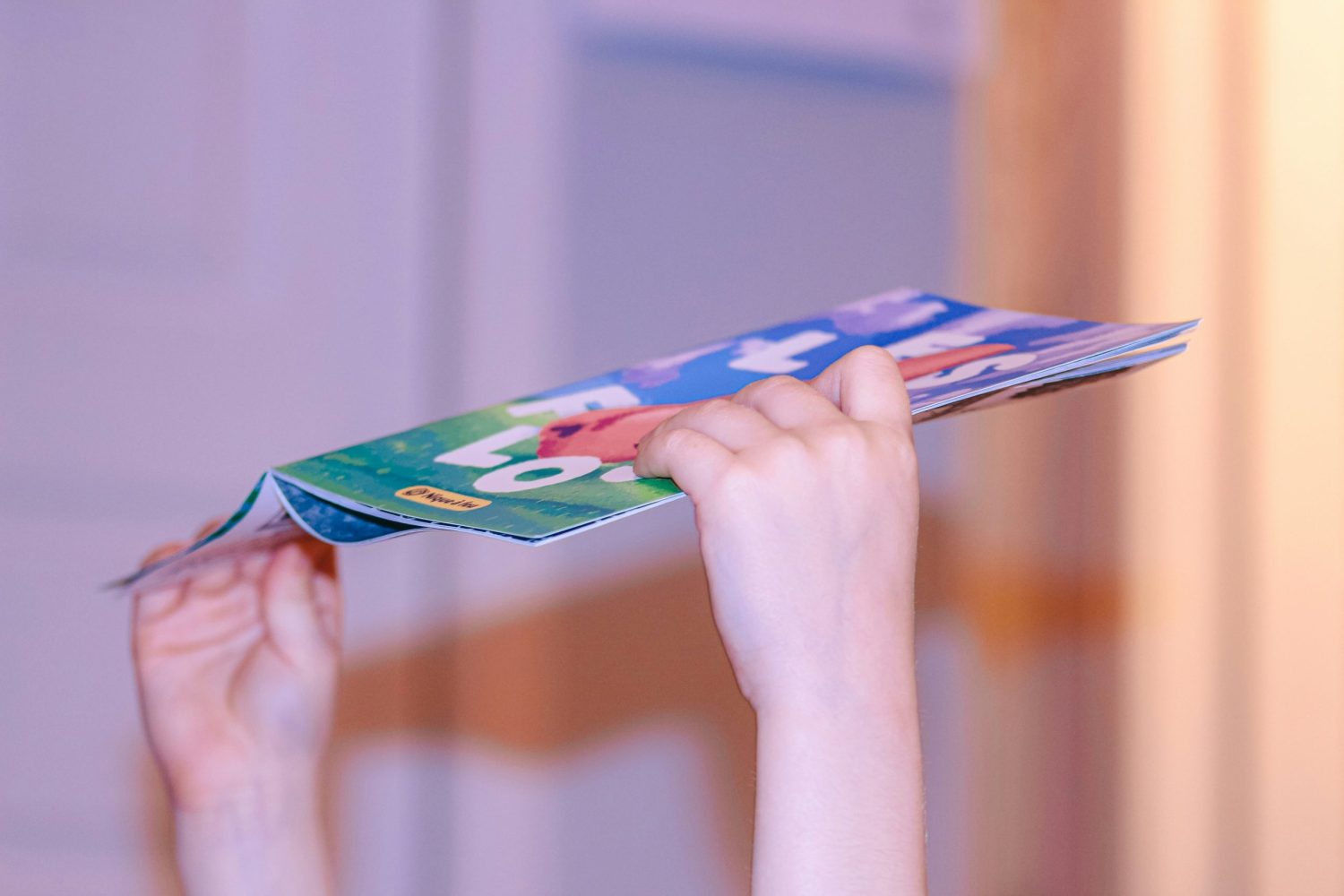
The challenge is choosing how to deliver those materials. A tuition centre may want families living near its premises to learn about its programmes, while a restaurant may want office workers to notice a lunch promotion. A household distribution campaign and a street distribution campaign can both deliver printed materials, but they reach people in different situations. Choosing the appropriate method helps businesses align their distribution activity with the intended audience and purpose.
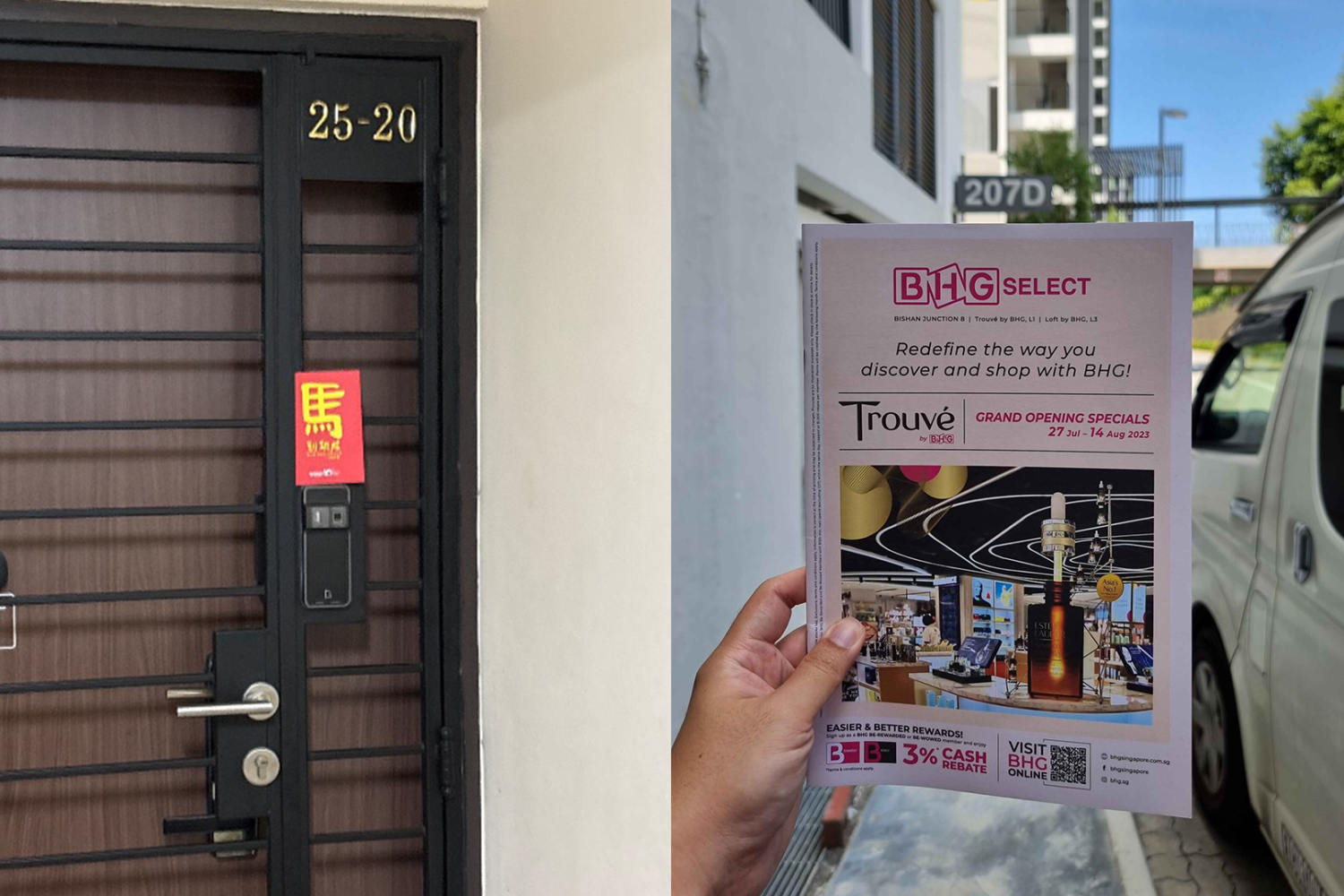
For Singapore SMEs, the decision should consider more than the number of copies distributed. Businesses should assess where the intended recipients are likely to be, whether the material needs to be delivered to a household or handed directly to an individual, and what action should follow. The format also matters. A lightweight flyer, detailed booklet, catalogue, or voucher pack may require different handling, manpower, and logistics.
Door-to-Door vs Hand-to-Hand Flyer Distribution: Which Method Suits Your Campaign?
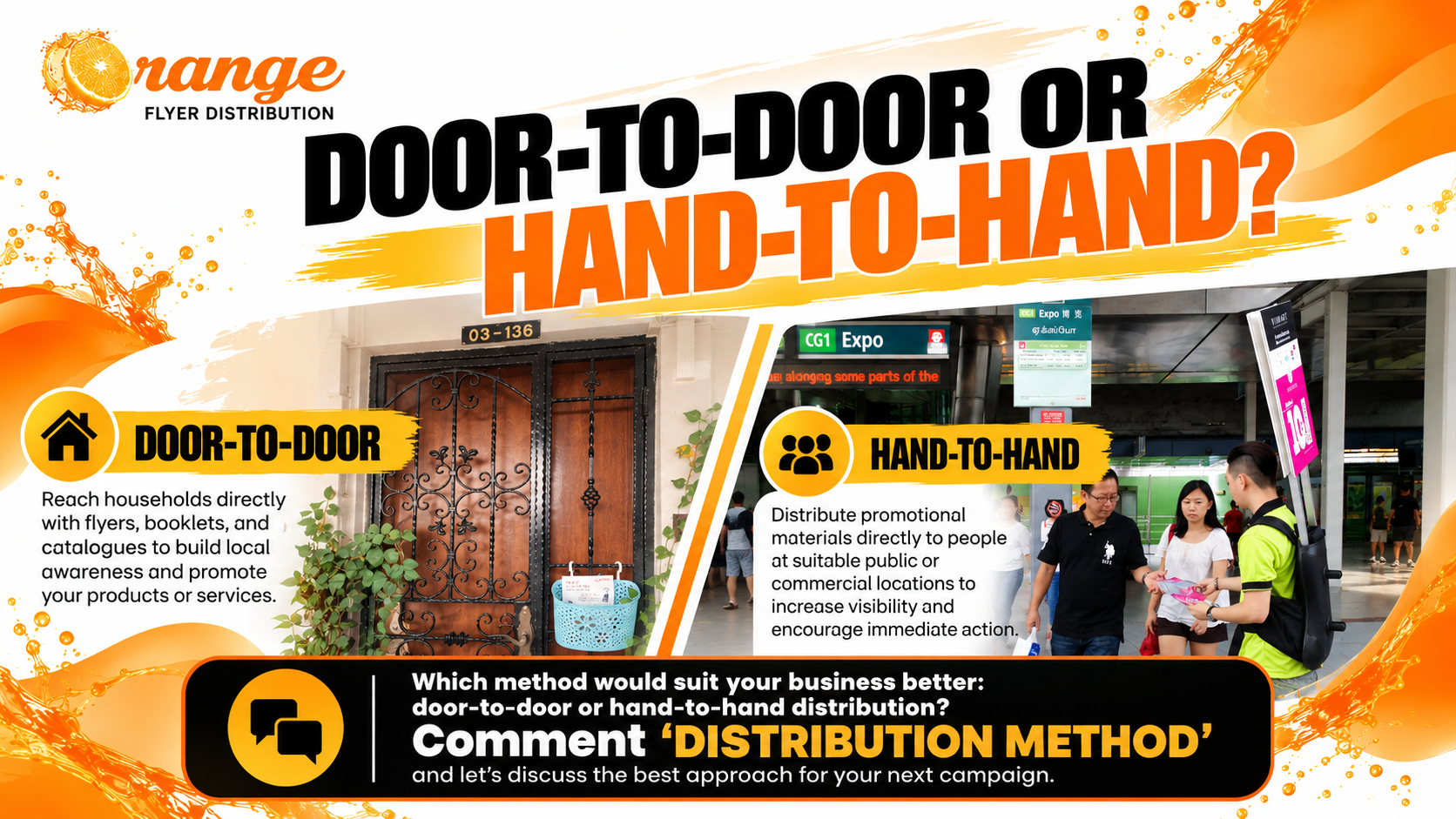
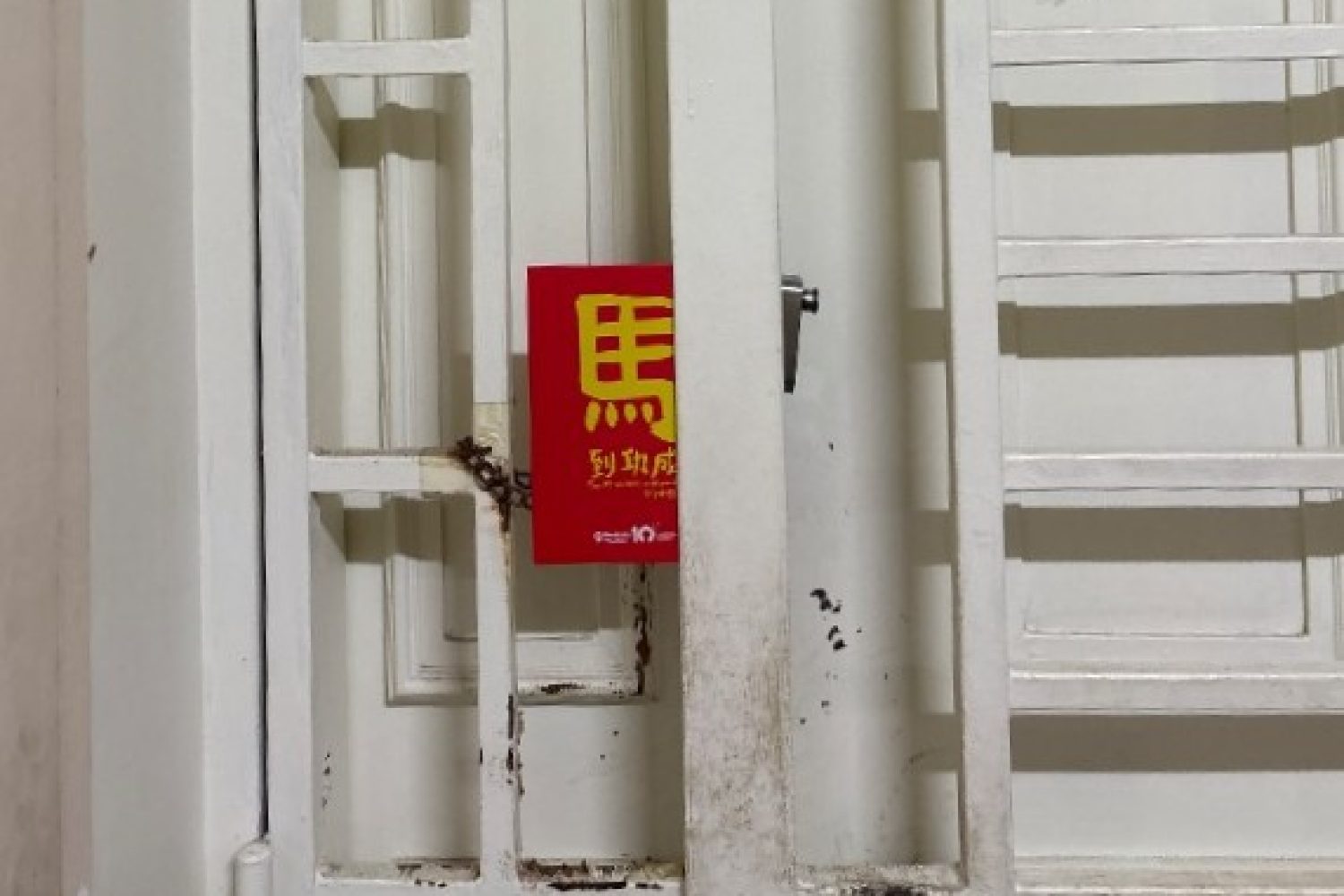
Door-to-door distribution focuses on delivering marketing materials to households within selected residential areas. Depending on the campaign, this may involve HDB estates, condominiums, landed properties, or authorised letterbox delivery arrangements. It is suitable for tuition centres promoting classes to nearby families, home service providers introducing their services, retailers sharing neighbourhood offers, and F&B businesses encouraging residents to visit a nearby outlet. Its main objective is household awareness and local reach.
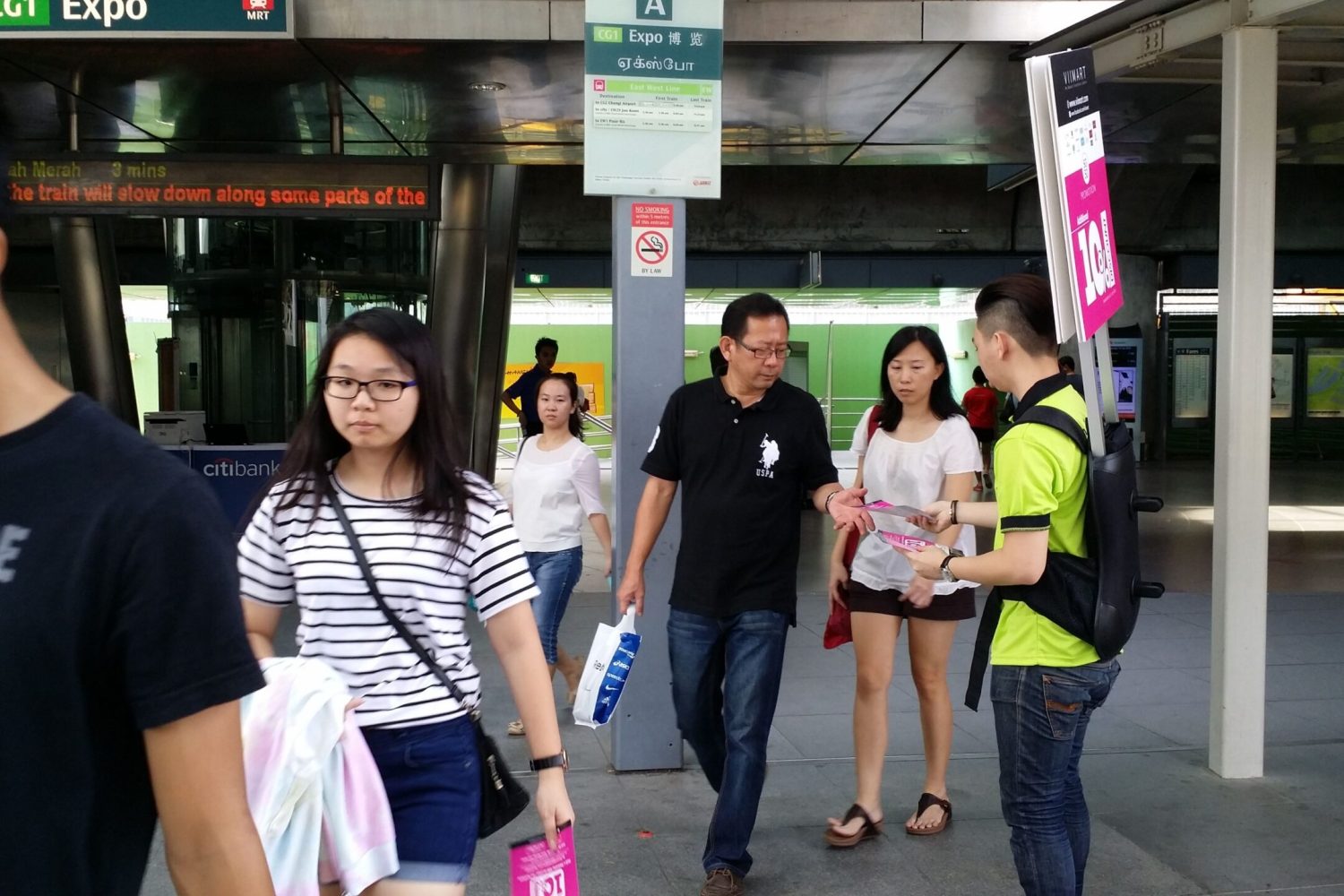
Hand-to-hand distribution, also known as street or public distribution, involves giving printed materials directly to people at suitable, permitted locations. Restaurants may distribute lunch vouchers around relevant office areas, retailers may promote offers near shopping districts, and fitness studios may introduce trial sessions at approved promotional locations. Direct contact creates an opportunity for a brief interaction, although it does not guarantee that the recipient will read the material or make a purchase. Its main objective is direct visibility and an opportunity to act.
Comparison | Door-to-door distribution | Hand-to-hand distribution |
Primary audience | Households and residents | People at selected public or commercial locations |
Main objective | Household awareness and local reach | Direct visibility and immediate opportunities to act |
Suitable businesses | Tuition centres, home services, neighbourhood retailers, F&B | Restaurants, retail shops, fitness studios, events and promotions |
Typical material | Flyers, booklets, catalogues and household offers | Flyers, vouchers, brochures and promotional booklets |
Operational needs | Residential routes, delivery planning, access arrangements and manpower | Approved locations, suitable timing, distributor coordination and engagement |
Key consideration | Household coverage and delivery requirements | Audience relevance, location permissions and opportunities for interaction |
Neither method is universally better. Door-to-door distribution may be more suitable when the objective is to reach households, while hand-to-hand distribution may be more appropriate when the campaign depends on reaching people at a particular place or time. The right choice comes from matching the method to the campaign objective and operational requirements.
Real Campaign Examples: Reaching Households and Engaging Commuters
Case Study 1: Ministry of Finance Household Booklet Distribution
The Ministry of Finance needed to communicate important financial updates to households across Singapore, including residents who might not regularly encounter the information online. Orange Flyer Distribution coordinated printing, logistics, and more than 100 distributors to support the large-scale campaign. Booklets were distributed across HDB estates, while a partnership with SingPost extended coverage to private housing communities. This approach supported islandwide household communication through appropriate offline delivery channels.
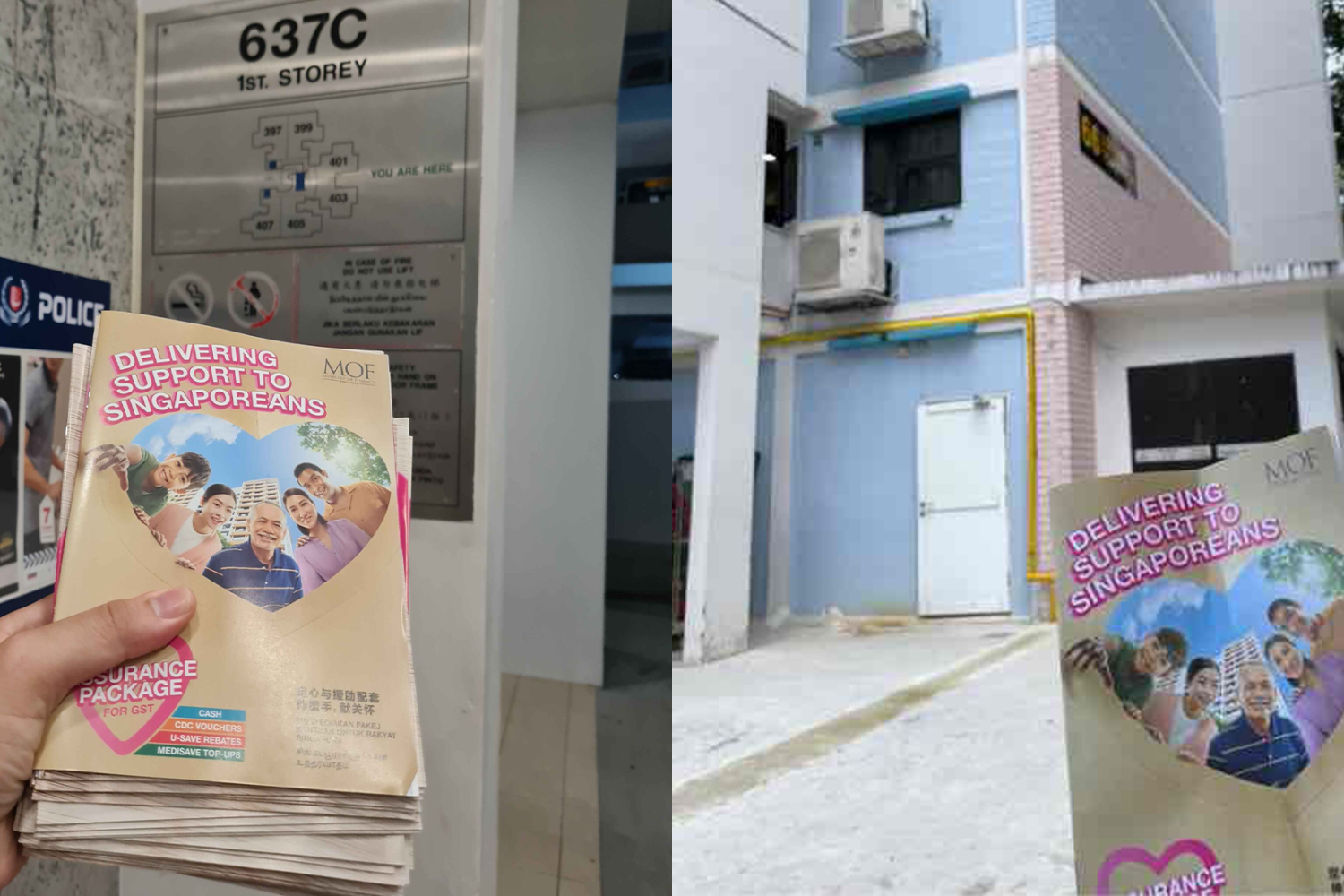
The campaign addressed a practical communication challenge: important information needs to reach its intended audience, including people with different digital habits. Printed booklets gave residents physical material they could read at their own pace. For organisations and businesses communicating detailed information, household distribution can therefore be useful when broad residential coverage is an important objective.
Case Study 2: Time Out Booklet Distribution at SMRT Stations
Time Out wanted to strengthen its brand presence and connect with commuters through its entertainment and lifestyle content. Orange supported booklet distribution at SMRT stations, using suitable high-traffic locations and authorised arrangements to reach people during their daily journeys. Brand ambassadors distributed the materials and helped introduce the publication directly to commuters, while the booklets included calls to action that encouraged readers to engage with the brand beyond the initial encounter.
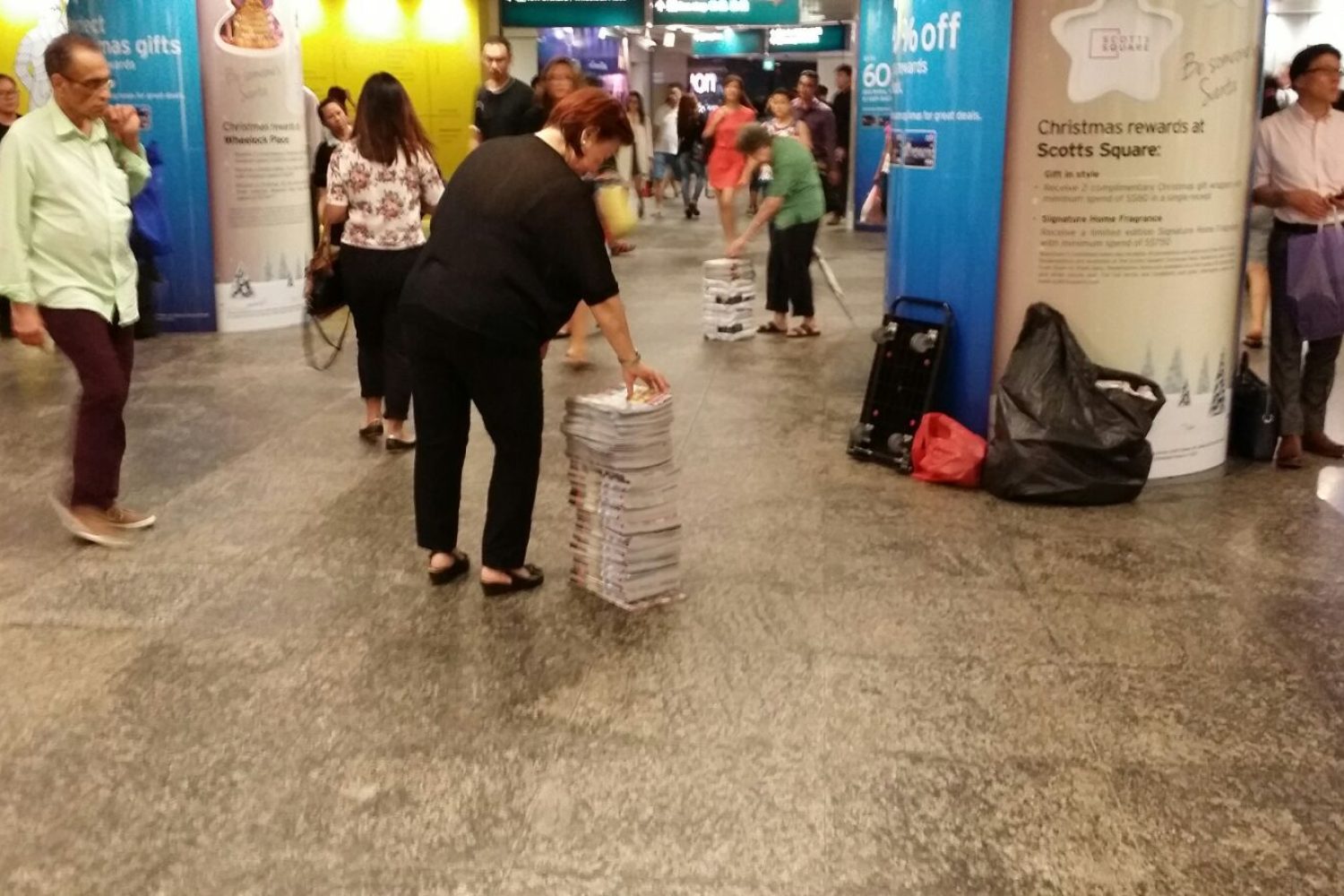
This campaign illustrates the role of hand-to-hand distribution when a business wants to introduce its offering directly to people in a relevant setting. Commuters had an opportunity to receive the publication and discover its content, while the distribution team helped create a recognisable brand interaction. The case highlights the importance of coordinating location, timing, manpower, and material design to make direct distribution more effective.
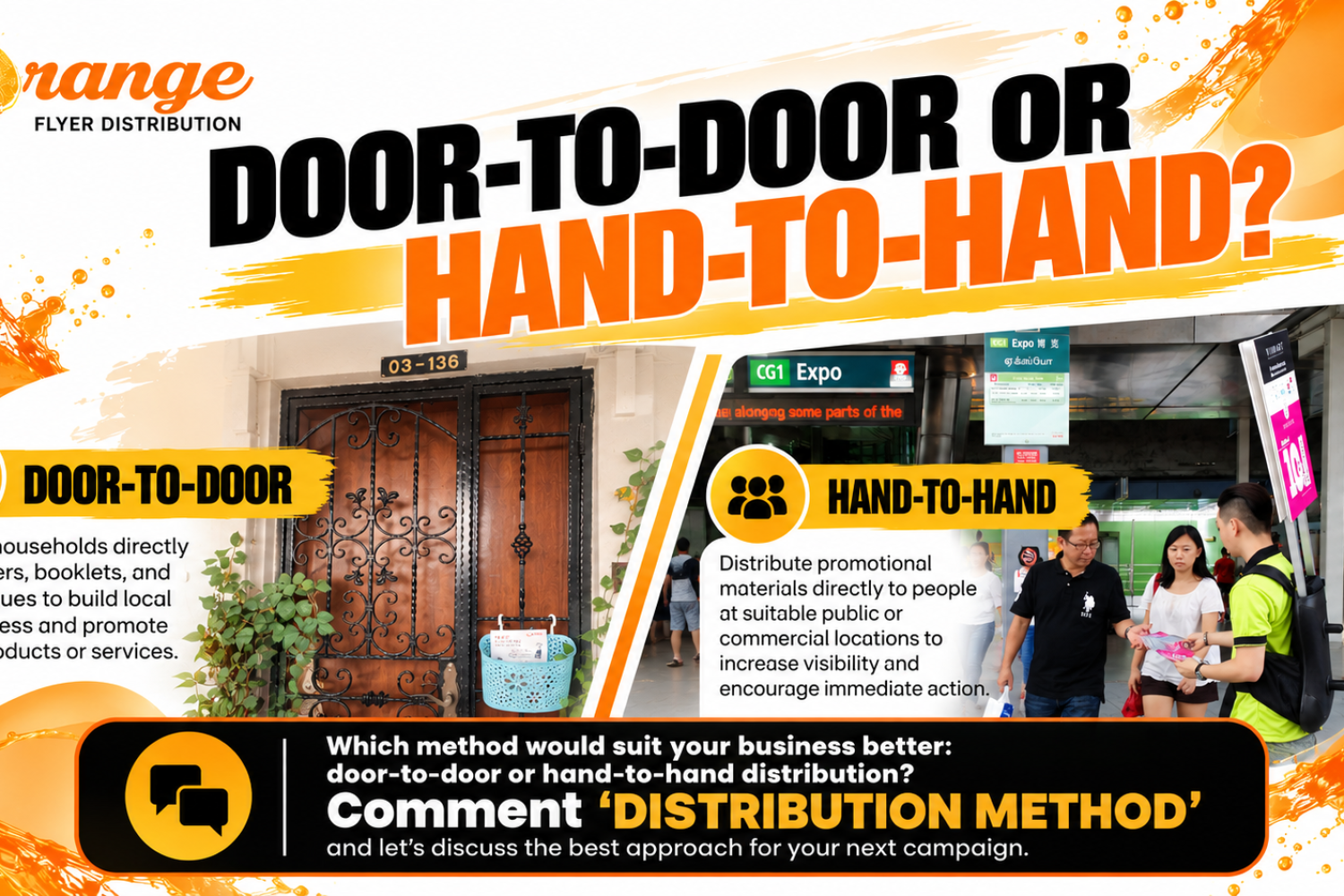
Together, these examples show how the distribution method can reflect the communication objective. The Ministry of Finance campaign prioritised household reach, while the Time Out campaign used direct distribution to introduce content to commuters. The appropriate method depends on what the organisation needs to communicate and how it wants to reach its audience.
How Orange Helps You Choose the Right Distribution Method
Choosing the right distribution method depends on your campaign goals, target audience, and budget. Orange Flyer Distribution helps Singapore SMEs plan door-to-door campaigns for household reach and hand-to-hand distribution at suitable public or commercial locations for direct engagement. We also help businesses consider materials, manpower, timing, and location permissions. For property agents, new guidance introduced in April 2026 restricts door-to-door distribution and the display of property flyers at HDB homes. Authorised letterbox channels, such as SingPost, remain an option.
Ultimately, the right distribution method is the one that supports your business goals. Before committing your budget, consider who needs to receive your message, what material will communicate it clearly, and what you want recipients to do next. By planning these elements alongside printing, logistics, and manpower requirements, you can make a more informed decision about how to reach potential customers.
Which method would suit your business better: door-to-door or hand-to-hand distribution? Comment “DISTRIBUTION METHOD” and tell us your business type, target audience, and campaign objective. We would love to hear what you are planning and share ideas on which distribution approach could suit your next campaign.
Q&A
What is the difference between door-to-door and hand-to-hand flyer distribution?
Door-to-door distribution delivers materials to households in selected residential areas. Hand-to-hand distribution involves giving materials directly to people at suitable, permitted locations. Door-to-door prioritises household reach, while hand-to-hand creates an opportunity for direct contact.
Which distribution method is better for Singapore SMEs?
Neither method is always better. Door-to-door distribution may suit businesses targeting households, while hand-to-hand distribution may suit businesses promoting offers around relevant commercial areas or events. The decision depends on the audience, campaign objective, budget and execution requirements.
Is door-to-door distribution suitable for tuition centres and home service providers?
It can be suitable when the business serves households in the selected area. Tuition centres can introduce classes and trial programmes, while home service providers can share service information and contact details with residents.
Can restaurants use hand-to-hand flyer distribution in Singapore?
Yes, at suitable locations where distribution is permitted. Restaurants may use flyers or vouchers to promote lunch deals, new menu items, or limited-period offers to people in relevant commercial areas.
Can I combine door-to-door and hand-to-hand distribution?
Yes. A business could use household distribution to introduce an offer and a separate, permitted hand-to-hand activity to provide another opportunity for direct engagement. The combination should have a clear purpose and fit the campaign’s budget and logistics.
Are property agents allowed to distribute flyers door-to-door at HDB estates?
From April 2026, new guidance for property agents restricts direct door-to-door distribution of property marketing materials at HDB estates and prohibits leaving those flyers visible in public areas. Authorised letterbox delivery channels, such as SingPost, remain an option. Property agents should consult the applicable CEA guidance and their agency’s procedures before arranging a campaign.