
Quick Answer: Why Do Heavy Booklets Need a Different Distribution Plan?
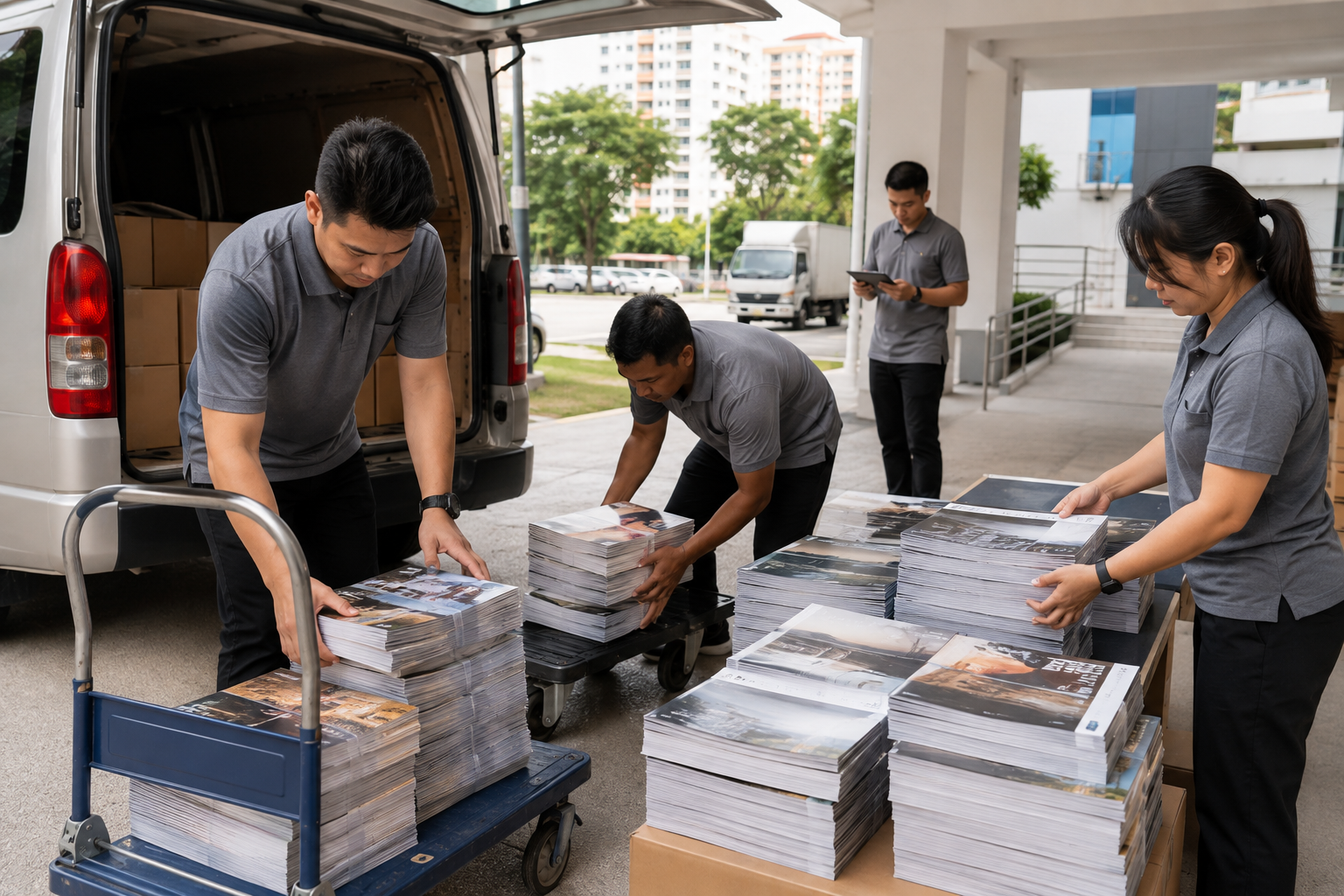
Heavy booklets, catalogues, newspapers and sample packs require different distribution planning because their weight, size and handling requirements can affect route capacity, manpower, transportation and replenishment. A route designed for lightweight flyers may become inefficient when every distributor needs to carry heavier materials.
For Singapore businesses, this can become particularly important when campaigns involve thousands of households, multiple HDB estates, commercial areas or event venues. Proper planning helps businesses manage packing, transportation, distribution coverage and material handling while keeping the campaign aligned with its target audience.
At Orange Flyer Distribution, we approach heavy material distribution as a campaign planning exercise. The objective is to determine who should receive the material, where they should receive it, how much each team can reasonably handle, and whether one or multiple waves of exposure would make sense for the campaign.
Why Heavy Material Distribution Requires More Planning
A standard flyer is lightweight and easy for a distributor to carry in large quantities. A catalogue, booklet or sample pack can be considerably different. The additional weight means distributors may carry fewer pieces per trip, which can affect route capacity and increase the need for replenishment.
This makes packing by block, building or venue an important part of the planning process. Instead of giving a distributor the entire campaign inventory, materials can be organised according to specific routes. For HDB distribution, for example, stock can be prepared according to selected blocks or estates. For events or commercial locations, materials can be grouped according to individual venues or distribution points.
Manpower is another consideration. A team-based operation provides greater flexibility than relying on a single distributor to carry, move and distribute everything independently. Depending on the campaign, trolleys, vehicles, temporary stock points and replenishment arrangements can also be incorporated into the distribution plan.
What Businesses Should Consider Before Distributing Heavy Booklets
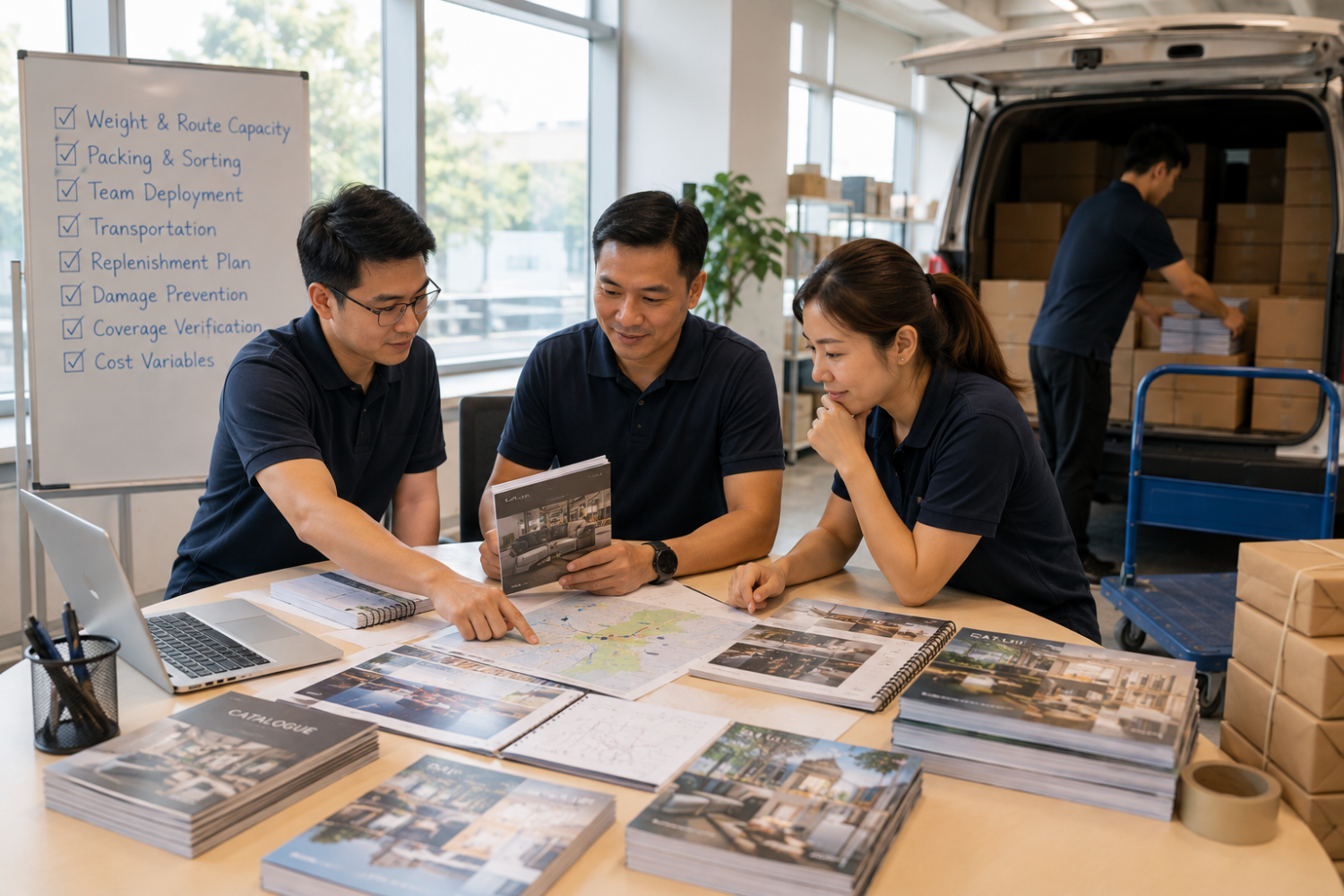
There are several practical factors to review:
- Weight and route capacity: How many pieces can realistically be carried per trip?
- Packing: Can materials be organised according to block, building, estate or venue?
- Team deployment: How many distributors are required for the target area?
- Transportation: Are vehicles or trolleys needed to move materials efficiently?
- Replenishment: Where will additional stock be supplied during the campaign?
- Damage prevention: How will catalogues, booklets and samples be protected?
- Coverage verification: How will the campaign team monitor whether planned areas have been covered?
- Cost variables: How do quantity, material weight, manpower, distance and campaign duration affect the overall operation?
These considerations are particularly relevant to retailers, healthcare groups, education providers, event organisers, F&B businesses and consumer-product brands distributing catalogues, informational booklets, newspapers or product samples.
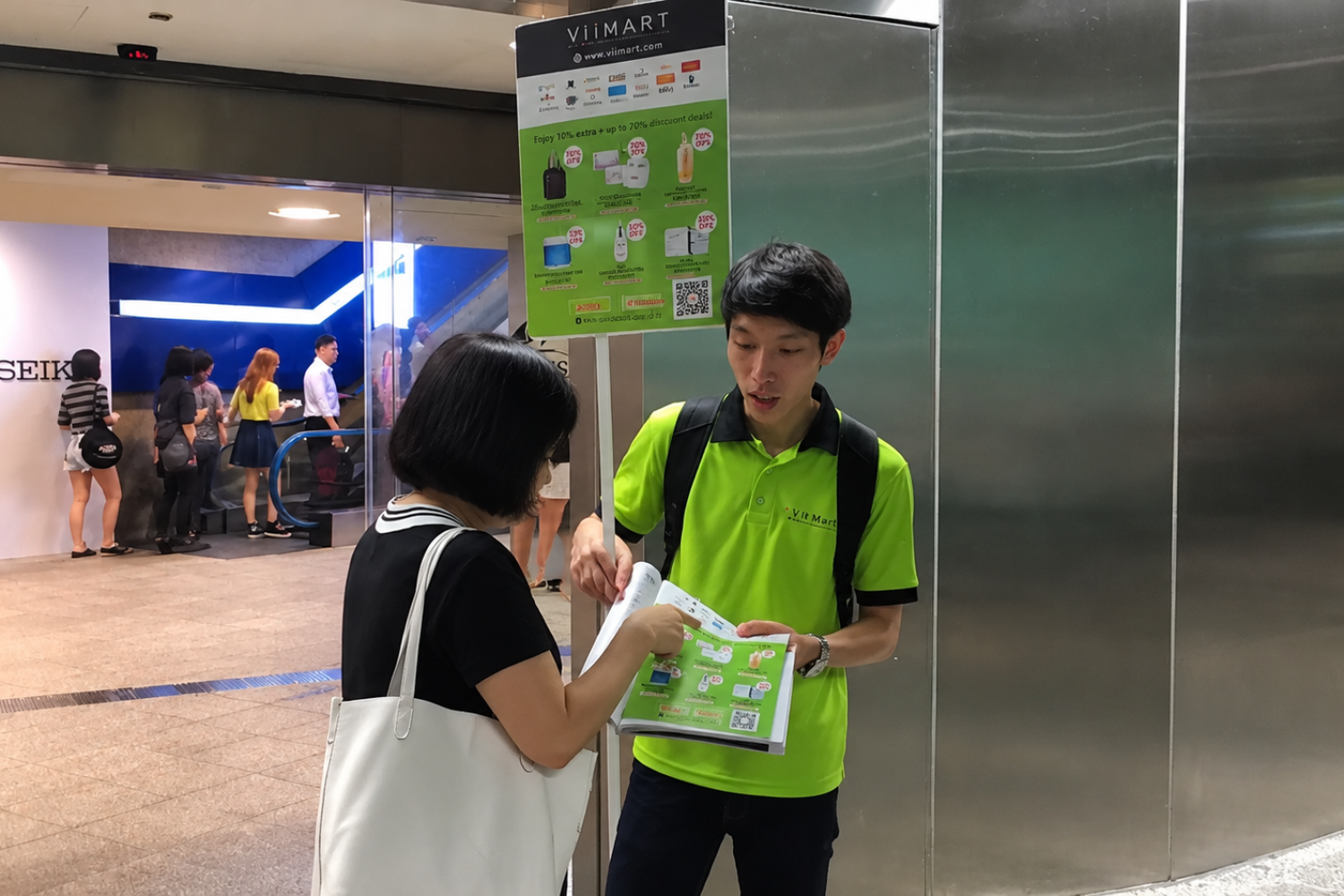
Two-Wave Distribution: Why Repeated Exposure Can Support Brand Recall
Heavy material distribution can also be planned as a two-wave campaign. Instead of treating distribution as a single exposure, businesses can divide the campaign into an initial introduction followed by a planned reminder.
Wave 1: Introduce the brand
The first wave can introduce a product, service, promotion, event or new brand to the target audience. A booklet can provide more information than a simple promotional message, while a sample pack can give consumers an opportunity to experience the product.
Wave 2: Reinforce the message
After a suitable interval, the second wave can remind the same or a similar audience about the campaign. This could include a promotional offer, voucher, QR code, store location, booking opportunity or another call-to-action.
Repeated exposure does not guarantee a purchase, but familiarity can play a role in how people recognise and remember a brand. For campaigns where brand recall and consideration matter, a planned second exposure can therefore be worth considering.
The key is to give the second wave a purpose. It could reinforce the original message, introduce a new promotion or create urgency around an upcoming deadline. This makes the campaign more deliberate than simply repeating the same distribution.

Case Studies: Managing Large-Scale Booklets and Product Samples
Ministry of Finance: Reaching Households Across Singapore
The Ministry of Finance needed to distribute important financial information to residents across Singapore, including people who were less active on digital platforms. Orange supported the campaign through print handling, logistics management, HDB distribution and private-house coverage through a partnership with SingPost.
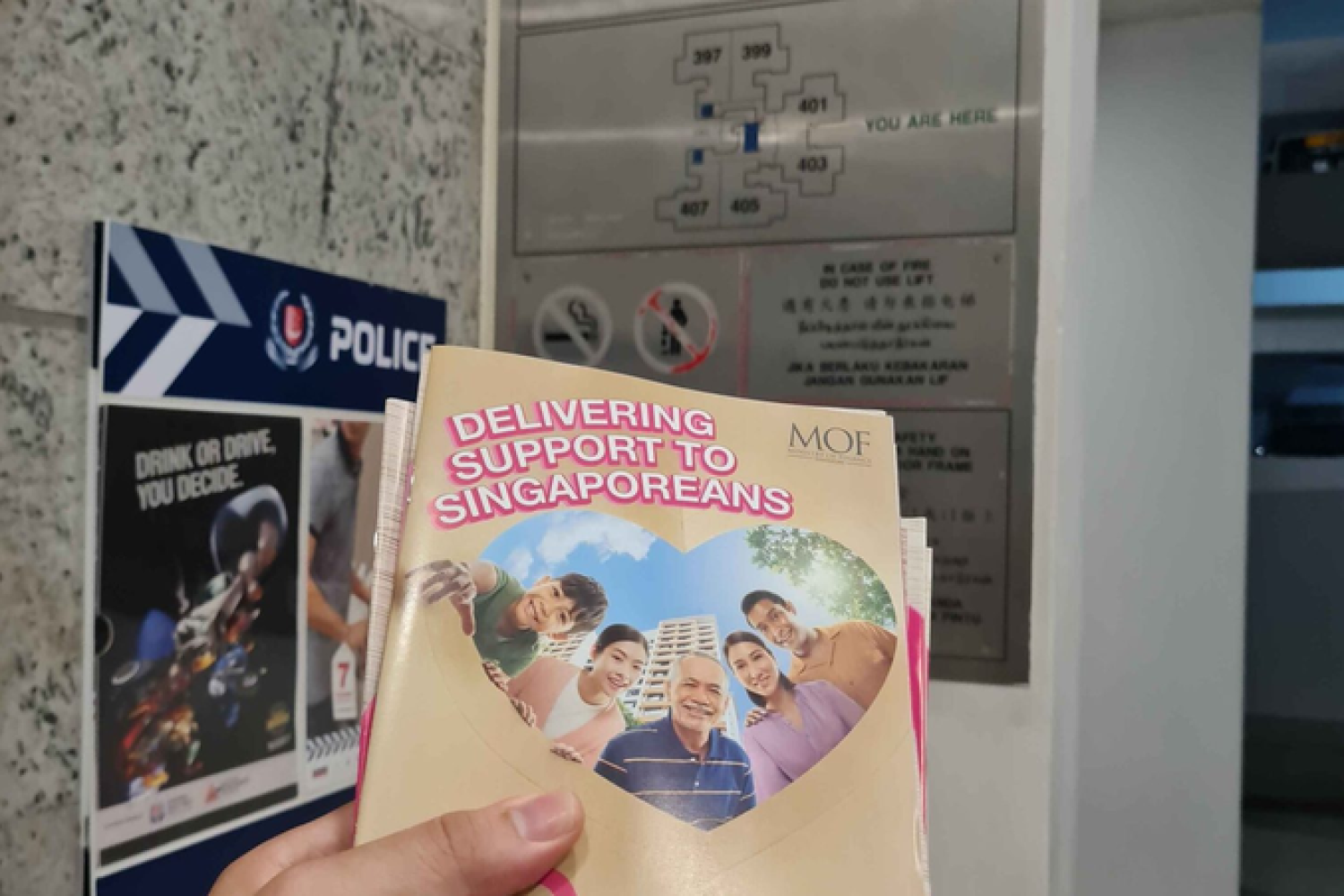
The campaign involved more than 100 distributors, making coordination a critical part of the operation. For HDB residents, booklets were distributed directly across residential estates, while private housing residents were reached through the SingPost partnership. The campaign demonstrated how large-scale booklet distribution requires more than moving printed materials from one location to another. It requires coordinated manpower, logistics and route planning to achieve broad coverage.
Zappy Spray: Bringing Product Samples to HDB Households
Product sampling creates another practical challenge because the materials being distributed have physical weight and volume. For a household product campaign such as Zappy Spray, products including bathroom and toilet cleaner, kitchen cleaner and degreaser, and fabric and surface antibacterial spray can be introduced directly to selected HDB households.
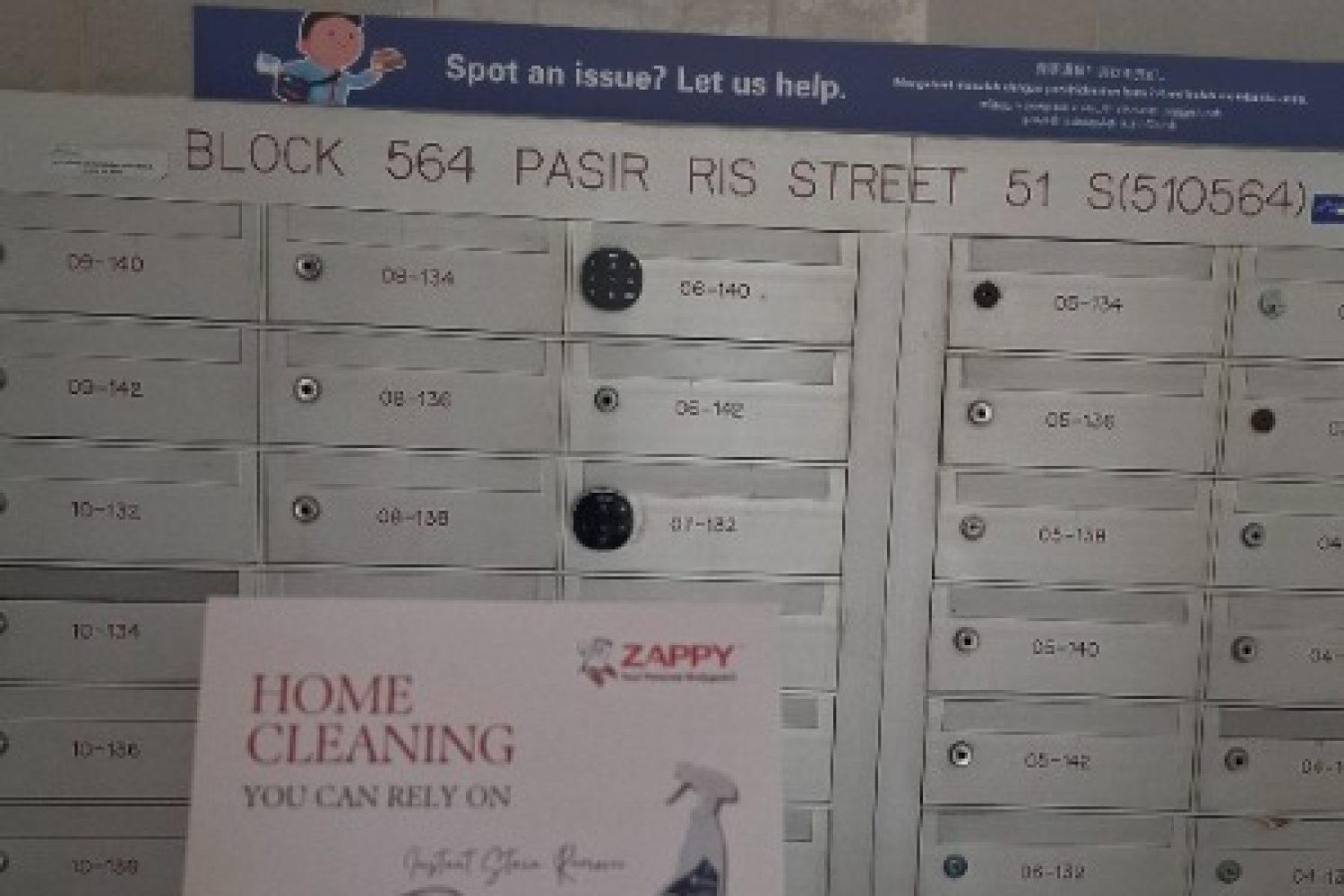
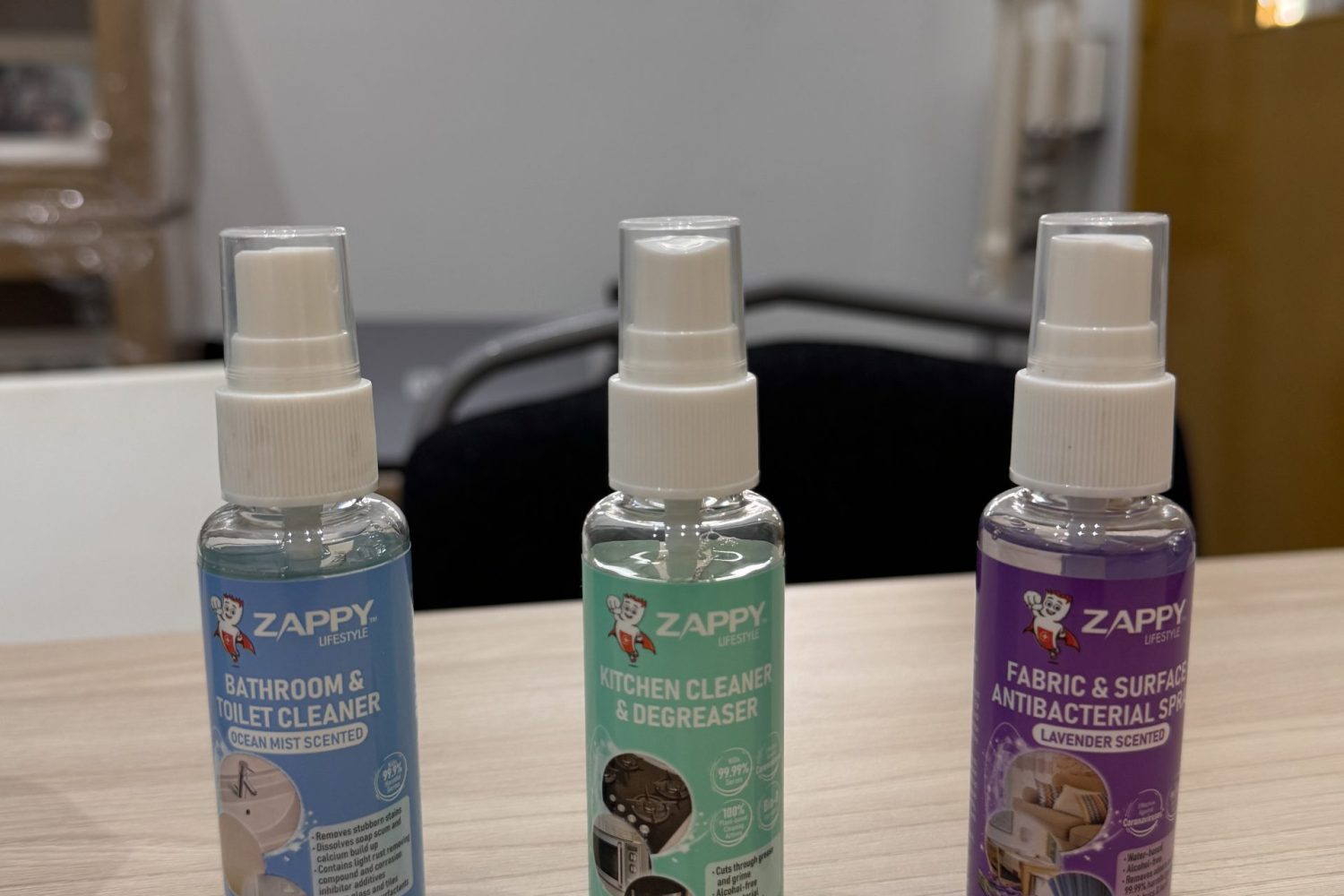
For this type of campaign, Orange can organise samples according to targeted estates and distribution routes. Teams can receive manageable quantities while additional stock is replenished as required. This reduces the need for distributors to carry excessive loads and helps maintain the condition of the samples throughout the campaign.
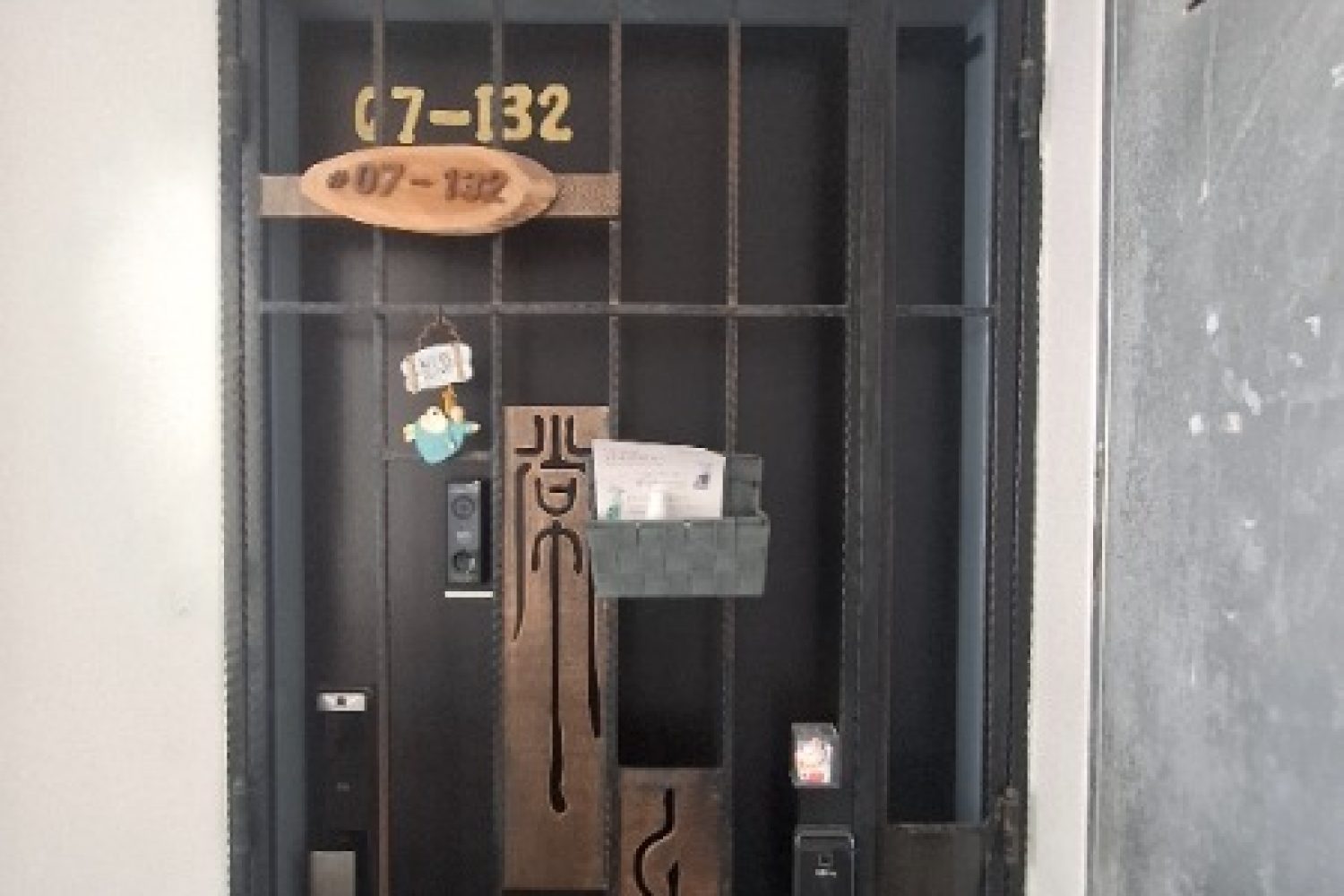
For consumer brands, the sample itself becomes part of the marketing experience. A cleanly presented product pack can encourage recipients to try the product, remember the brand and potentially look for it again later. Combining sampling with a booklet, voucher or QR code can also give consumers a clear next step after receiving the product.
How Orange Helps Singapore Businesses Plan Better Distribution Campaigns
The first step is audience targeting. Different businesses require different locations. A healthcare brand may target specific residential communities, while an education provider may focus on estates surrounding schools. Retailers can consider areas close to their outlets, while F&B brands may prioritise locations with suitable household or commuter profiles.
The second step is operational planning. Orange can consider the quantity, weight, size and format of the material alongside manpower, transportation, packing, replenishment and distribution locations. This is especially important for catalogues, heavy booklets, newspapers and product samples where the physical characteristics of the campaign material can directly influence route efficiency.
The third step is deciding whether the campaign would benefit from single-wave or two-wave exposure. A first distribution can introduce the campaign, while a second can reinforce the message. Businesses can also connect physical materials to digital actions through QR codes, directing recipients to product pages, vouchers, websites, booking forms, WhatsApp, e-commerce stores or other online destinations.
This creates a useful bridge between physical and digital marketing. A customer might first discover a product through a sample pack, read more information in a booklet, then scan a QR code to redeem a promotion. The physical distribution creates the initial touchpoint while the digital channel provides the next step.
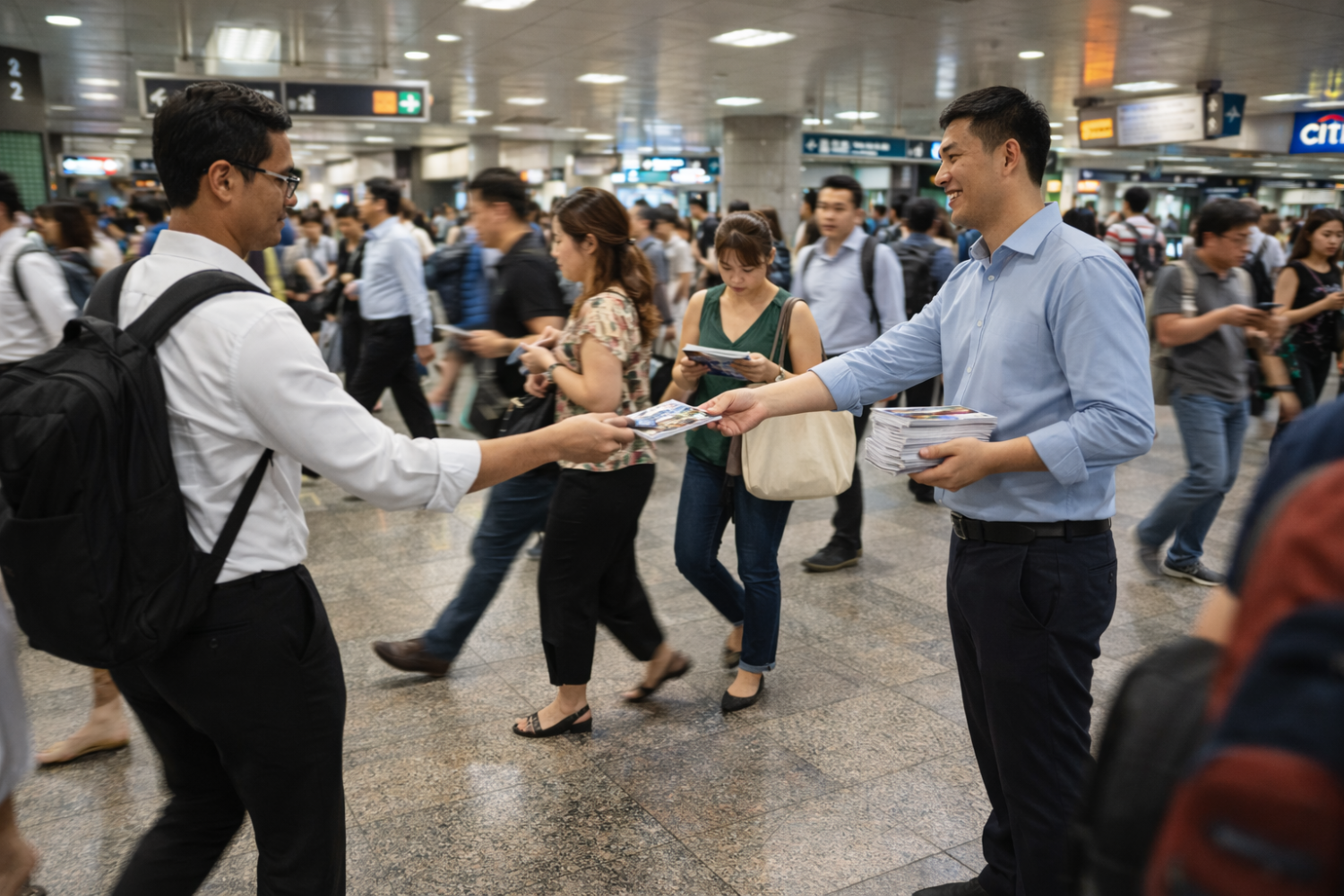
Closing: Plan the Campaign Around the Material and the Audience
Heavy booklets, catalogues and sample packs can be powerful marketing tools when the distribution strategy matches the physical requirements of the campaign. Weight, route capacity, packing, manpower, transportation, replenishment and coverage all need to be considered before distribution begins.
For Singapore businesses, targeting should also come before volume. Reaching the right HDB estates, communities, venues or commercial areas can make a campaign more relevant and efficient. When appropriate, a second distribution wave can provide another opportunity for customers to encounter the brand and remember the message.

At Orange Flyer Distribution, we help businesses plan physical marketing campaigns around their materials, audience and objectives. From booklet and catalogue distribution to sample packs and multi-wave campaigns, the focus is on creating an organised distribution process that supports the wider marketing goal.
What would you distribute if your campaign had to reach thousands of Singapore households? A catalogue, product sample, information booklet or promotional pack? And would you consider a second wave to reinforce the campaign?
Planning a heavy booklet, catalogue, or sample pack campaign?
Tell us what you are planning in the comments:
- “BOOKLET” if you are planning a booklet or catalogue campaign
- “SAMPLE” if you are planning product sampling
Our team can then share some ideas on how you could structure the distribution based on your campaign.
Q&A: Heavy Booklet and Sample Pack Distribution in Singapore
Can heavy booklets be distributed like ordinary flyers?
They can be distributed through similar channels, but their weight and size may require additional planning. Route capacity, manpower, transportation, replenishment, and material handling should be considered before the campaign starts.
Which businesses can benefit from catalogue distribution?
Retailers, education providers, healthcare groups, F&B businesses, home services, events and consumer-product brands can use catalogues to communicate more detailed product, service or promotional information.
Why use a team for sample pack distribution?
A team allows materials to be divided across manageable routes and makes replenishment and transportation easier to coordinate. This can be useful when samples are bulky, heavy or require careful handling.
What is a two-wave distribution campaign?
A two-wave campaign uses two planned distribution periods. The first introduces the brand or offer, while the second reinforces the message and provides another opportunity for customers to respond.
Can booklet distribution support online marketing?
Yes. Booklets and sample packs can include QR codes that connect recipients to websites, vouchers, product pages, WhatsApp, booking forms, e-commerce platforms, surveys or other digital destinations.
What should businesses consider before starting a heavy material distribution campaign?
Start with the target audience and campaign objective, then consider material weight, quantity, locations, packing, manpower, transportation, replenishment, coverage, and whether a second wave would add value.